
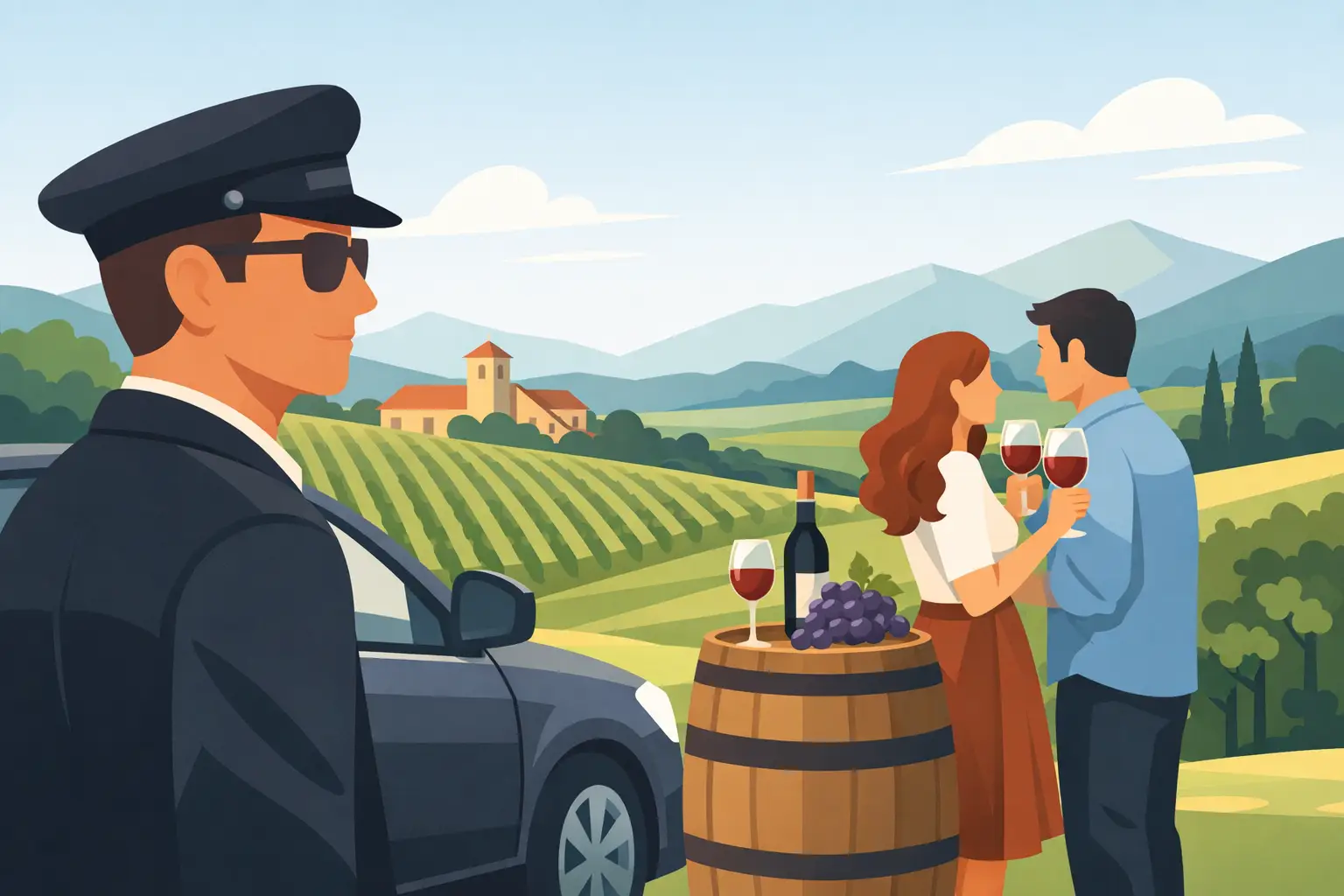
A designated driver for wine tasting is not a last-minute favor or the person who gets handed the keys after lunch. They are part of the itinerary from the first reservation onward. When you plan sober transportation early, you can choose wineries based on experience and location, keep appointment windows realistic, and enjoy the day without forcing anyone to make a questionable decision at the end.
Wine country often makes driving look easy. A map may show only a few miles between tasting rooms, but rural roads, traffic near popular corridors, limited rideshare coverage, and timed appointments can turn a casual plan into a stressful one. Build the day around a fully sober driver, then let the wine fit the route.
Decide who will drive before booking wineries
The best designated driver is someone who has clearly agreed to remain fully sober for the entire day. That agreement matters because tasting pours add up more quickly than many groups expect, especially across two or three appointments. A person who plans to "just have a few sips" is not the same as a designated driver.
Talk through the arrangement before reservations are made. Some groups rotate driving duties across different days of a weekend. Others designate one person for the full trip and plan a separate non-tasting experience for them, such as a vineyard walk, a restaurant stop, spa time, or a scenic outing. A hired driver or private transportation service can also make sense when everyone wants to taste, particularly in regions where wineries are spread out.
There is no single right choice. The practical question is whether your transportation plan remains safe, available, and on time after the final appointment. If the answer depends on someone feeling fine later, choose a different plan.
Build the designated driver for wine tasting route
A designated driver still benefits from a compact itinerary. Sober transportation reduces risk, but it does not eliminate the problems created by a route with too much driving. Long distances can mean late arrivals, rushed tastings, missed meals, and less time to enjoy the places you reserved.
Start by choosing one corridor, town, or compact subregion for the day. In Napa Valley, that may mean staying close to one stretch of Highway 29 or Silverado Trail rather than crossing the valley repeatedly. In Sonoma County, it may mean committing to Healdsburg, the Russian River Valley, or Sonoma Valley instead of trying to fit all three into one afternoon. The same approach works in Paso Robles, Willamette Valley, Finger Lakes, and Walla Walla: keep the route short and avoid backtracking.
Reserve your anchors first. These are the wineries you care most about, the appointments with limited availability, or the experiences that require a longer drive. Once those are confirmed, add only nearby stops that fit the remaining time. Leave room for parking, check-in, restroom breaks, purchases, and the occasional delay on a country road.
For most groups, two tastings are comfortable and three is a full day. A fourth stop can work if pours are modest, the wineries are very close together, and the group has a clear meal break. It usually does not work well when appointments are 30 minutes apart in different towns.
Protect the driver's schedule, too
The driver should know every reservation time, address, parking instruction, and check-in expectation. Put the full schedule in one shared place rather than relying on scattered confirmation emails. Include each winery's phone number, but do not assume a late arrival can always be accommodated.
Plan to arrive 10 to 15 minutes before each appointment. That buffer gives the driver time to navigate unfamiliar entrances, find parking, and handle a last-minute route change without putting the group behind. If one tasting runs late, skip the optional stop rather than speeding to preserve an overpacked schedule.
Make the day enjoyable for the sober guest
A designated driver should not feel like the logistics employee of the group. The role deserves appreciation, but it also needs a plan that makes the day worthwhile. Many tasting rooms can provide nonalcoholic options such as sparkling water, still water, coffee, tea, or soft drinks, although availability varies. Ask when you book if the driver would like a nonalcoholic pairing or a reduced-price option.
Do not assume every winery discounts a tasting for a designated driver. Some do, some offer a nonalcoholic experience, and some charge the same hospitality fee regardless of what is poured. Confirm the policy before you commit, especially if cost is a factor for your group.
The driver can also participate in ways that do not involve alcohol. They may enjoy the vineyard setting, production tour, food pairing, architecture, local history, or the chance to compare hospitality and scenery across wineries. If they are interested in wine but abstaining for the day, they can smell wines, ask questions, take notes, and decide which bottles the group may want to bring home. Spitting is common at professional tastings, but it does not make someone a designated driver if they consume alcohol at any point. Fully sober means fully sober.
Pace food, water, and purchases around the route
Food and water support the entire group, not only the driver. Eat a substantial meal before the first appointment and schedule a real lunch if the day includes more than two tastings. A snack board at one tasting room may be enjoyable, but it is not always enough to carry a group through several pours.
Keep water in the vehicle and drink it between stops. This will not cancel the effects of alcohol, but it can reduce the dehydration and fatigue that make a long tasting day harder. The driver should also have easy access to water, caffeine if they want it, and a break from managing everyone else's timing.
Plan bottle purchases with vehicle space in mind. Cases and shipping boxes can take up more room than expected, particularly in a smaller rental car. Store purchases securely out of direct sunlight and do not let shopping delay the group's departure for the next reservation. If a winery offers shipping, compare the cost and convenience before trying to fit every bottle into the trunk.
When a hired driver is the better option
A private driver, tour operator, or car service is often worth considering for celebratory weekends, groups where everyone wants to taste, or itineraries with limited local rideshare coverage. It can also be a better fit when your hotel is far from the tasting corridor or when you want to visit wineries that require longer rural drives.
The trade-off is cost and flexibility. A private driver may charge by the hour, require a minimum booking, or limit where they can travel. Shared tours can lower the cost but may not match your preferred wineries or reservation times. Book transportation only after you understand the winery schedule, then confirm that the vehicle can accommodate your group and any expected purchases.
Rideshare can work for a single dinner or an urban tasting room district, but it is less dependable for a full winery day. Service can be sparse outside town centers, and a pickup that looks available in the morning may not be available after the final tasting. Do not treat rideshare as a backup plan unless you have verified local coverage and a realistic pickup location.
A simple rule for changing the plan
If the designated driver becomes unavailable, do not try to salvage the itinerary by reducing pours, sharing tastings, or waiting a few extra hours. Cancel or revise the reservations, arrange professional transportation, or choose a non-tasting activity instead. Wineries understand that plans change, and a responsible adjustment is far better than a risky drive.
A well-planned tasting day leaves room for the unexpected: a favorite winery where you stay longer, a scenic pull-off, a delayed lunch, or a bottle you want to discuss over dinner. Give your designated driver a clear role, a short route, and a schedule they can actually operate. That is how wine country stays enjoyable from the first reservation to the hotel driveway.