
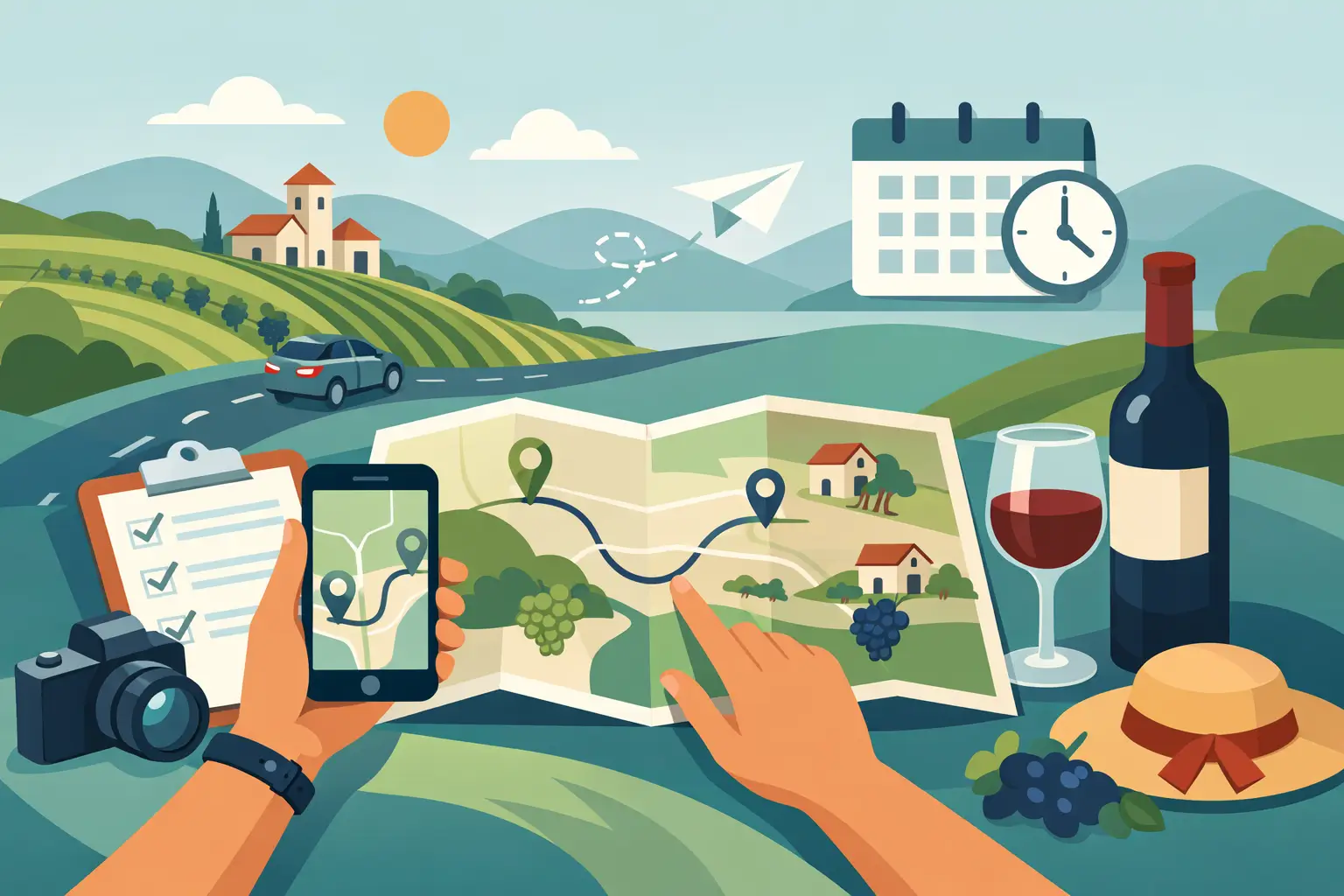
A winery day can fall apart before the first pour: a noon appointment is 35 minutes from the hotel, the next tasting begins at 1:00, lunch has not been planned, and nobody has decided who is driving. Knowing how to plan a winery tasting trip means solving those details before you arrive, so the day feels relaxed rather than tightly managed.
The best itineraries are not built around the largest possible number of wineries. They are built around a small number of good-fit reservations in the same area, with enough time to travel, eat, and taste responsibly. Start with the logistics, then let the wine be the reward.
Start With the Shape of Your Trip
Before researching individual tasting rooms, decide what kind of day you can realistically support. A single-day visit from a nearby city has different limits than a three-night stay in Napa Valley, Paso Robles, or the Willamette Valley. Your lodging location, group size, transportation, and budget will determine what is practical.
Choose one regional hub or one driving corridor per day. In Sonoma County, for example, Healdsburg, Sonoma Plaza, Russian River Valley, and the Sonoma Coast are not interchangeable day-trip zones. In Paso Robles, east-side and west-side wineries can look close on a broad map while requiring more time than expected between appointments. The same principle applies in Finger Lakes, Walla Walla, and other spread-out wine regions.
A useful rule is to plan around drive time, not straight-line distance. Country roads, harvest traffic, narrow routes, parking, and the time it takes to check in all add minutes. Keep the route short, especially if your group is new to wine-country travel.
Reserve Your Anchor Wineries First
Your anchor wineries are the places you would be disappointed to miss. They may have a specific producer you collect, a vineyard tour, a seated food pairing, a cave visit, or a limited number of daily appointments. Reserve these first, then build the rest of the day around them.
Many tasting rooms now require reservations, particularly on weekends, holidays, and peak-season dates. Some offer walk-ins only when capacity allows. Do not treat a walk-in policy as a guarantee, and do not assume a tasting room will accommodate a larger group without advance approval.
When choosing appointment times, leave more space than the tasting itself appears to require. A 60-minute tasting can easily become a 75- or 90-minute stop once you account for arrival, restroom breaks, purchases, photos, and conversation with the host. For most travelers, two reservations in a day are comfortable. Three can work when the wineries are nearby and the experiences are concise. Four is usually too much unless the stops are unusually short and your transportation is already handled.
Book in an Order That Supports the Route
A practical tasting day often starts around late morning, includes a food break, and ends before late afternoon traffic or fatigue becomes a problem. For example, reserve an 11:00 a.m. tasting near your lodging, schedule lunch around 12:30 or 1:00 p.m., and book a second tasting at 2:30 or 3:00 p.m. If you add a third stop, make it close by and give yourself at least 90 minutes between start times.
Avoid backtracking. If the first winery is north of town, choose later stops that continue north or sit along the same corridor. A regional winery map with reservation and business-type filters can make this much easier than searching winery names one by one. Discover Wine Online is designed for exactly this kind of route building: comparing nearby stops before you commit to an inefficient day.
Match the Experience to Your Group
Not every winery visit has the same pace, price, or atmosphere. A standard bar tasting may take 30 to 45 minutes. A private seated tasting, vineyard walk, or food-and-wine pairing may take 90 minutes or longer. Choose experiences that suit the group rather than booking every format that sounds appealing.
For a first-time visitor, one polished seated tasting and one casual stop may be more enjoyable than a schedule full of technical presentations. For collectors, prioritize wineries where you can taste limited releases, ask questions about allocation programs, or arrange shipping. For a friend group, verify group-size limits and cancellation policies before paying deposits.
Also check whether the tasting fee is waived with purchase and what purchase threshold applies. A waived fee is not automatically a savings if the required bottle purchase does not fit your budget or taste. Regional tasting passes can be worthwhile when they cover wineries you already want to visit and their locations fit your route. Compare the pass price with the individual fees you would actually pay, not with a long list of wineries you will never reach.
Build Food, Water, and Breaks Into the Schedule
Wine tasting is not a substitute for lunch. Eat a substantial meal before your first appointment, and plan a real food stop during the day. Cheese boards and small bites can be useful, but they may not be enough for a multi-stop itinerary.
Bring water in the vehicle and drink it consistently. Hydration does not remove alcohol from your system, but it can help you avoid adding dehydration and fatigue to an already long day. Take breaks between tastings, use the restroom before getting back on the road, and do not rush from one appointment directly into another.
If a winery pours a flight of five or six wines, you are not obligated to finish every pour. Use the spit bucket when needed, especially if you are driving or expect to taste at multiple wineries. This is normal tasting-room etiquette and a responsible way to compare wines without overconsuming.
Choose Sober Transportation Before You Book
Transportation is not a detail to settle after the itinerary is full. Decide early whether your group will use a fully sober designated driver, a hired driver, a tour operator, or rideshare service where it is reliable. The right answer depends on the region, the size of your group, and how remote the wineries are.
A designated driver should remain fully sober, not simply drink less than everyone else. If each person wants to taste, hire transportation or select a tour that handles the route. In rural wine regions, rideshare availability can be limited, especially late in the day or outside town centers. Do not assume you can summon a car from a remote winery when your final tasting ends.
Confirm pickup locations, vehicle capacity, minimum-hour requirements, and whether your driver can wait during appointments. If you are using a hired service, give them the full itinerary and reservation times in advance. Keep the schedule flexible enough to absorb a slow tasting or unexpected traffic without pressuring the driver or your group.
Confirm the Details 48 Hours Ahead
A quick confirmation pass prevents common trip-day problems. Review every reservation email, including the exact address, arrival instructions, late-arrival policy, group-size rules, and cancellation deadline. Some wineries ask guests to arrive 10 to 15 minutes early; others have gates, unmarked driveways, or check-in locations separate from the tasting space.
Create one shared itinerary with winery names, addresses, reservation times, contact numbers, transportation details, and lunch plans. Download maps or save directions before leaving the hotel, since cell service can be unreliable on rural roads. It is also smart to assign one person to manage timing and another to keep track of purchases, club sign-ups, and receipts.
Bring a light layer, comfortable shoes, a phone charger, water, and a secure way to transport bottles. Heat can damage wine quickly, so do not leave purchases in a hot car for hours. If you are flying home, ask about shipping restrictions and timing before buying more than you can carry.
Leave Room for the Part You Cannot Schedule
The point of a well-planned winery tasting trip is not to follow a spreadsheet minute by minute. It is to create enough structure that you can enjoy an unexpected vineyard view, a recommendation from a tasting host, or a longer conversation about a bottle you genuinely love. Reserve the essentials, keep your route compact, and protect the margin in your day. That is what turns a list of appointments into a trip you will want to repeat.