
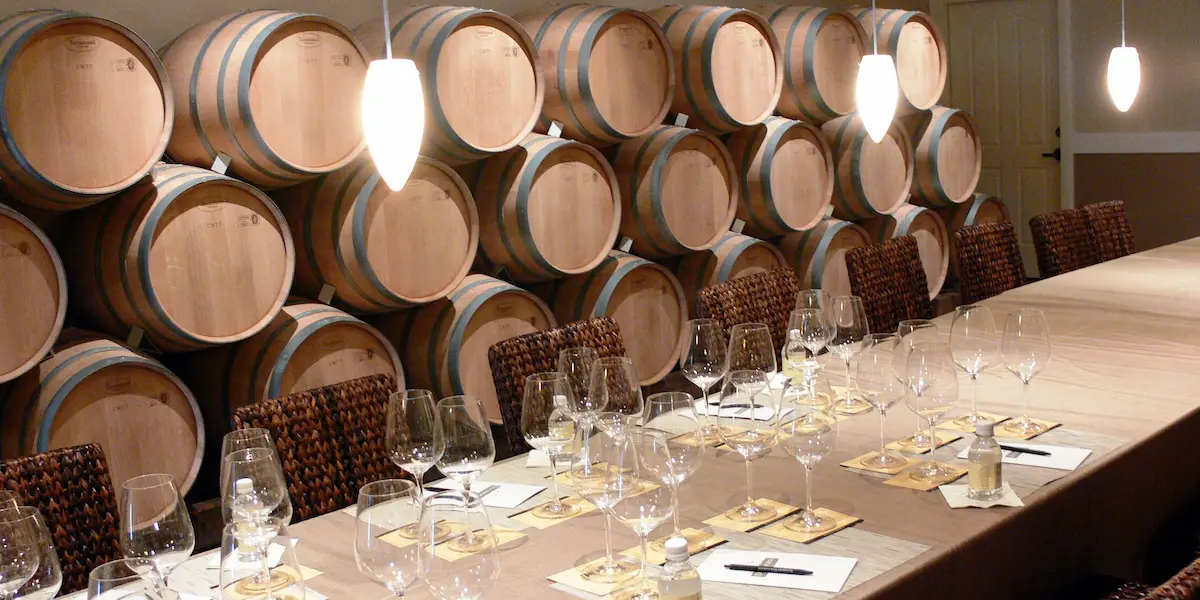
Wine tasting etiquette for beginners is mostly what hosts expect: punctuality, and not treating the host like a vending machine. The seating is staffed for your party. Arriving 20 minutes late, wearing heavy cologne, or debating a case at checkout while the next seating waits is the real faux pas—not failing to name “cassis.”
Good etiquette starts before the first pour. Read the confirmation: arrival window, group size, pets, kids, outside food. Some rooms can absorb a few late minutes; others must shorten or cancel because another party is booked next. Plan to arrive 10–15 minutes early. Wine-country roads are slower than mapping apps, and parking is tight on weekends and harvest. If you will be late, call as soon as you know.
Eat first (what to eat before tasting). Transportation is etiquette: a fully sober driver or a hired car, not “we’ll spit and hope.” The CDC1 advises planning that ride before you drink. According to NIAAA2, alcohol is absorbed faster on an empty stomach, which is why eating first is part of showing up able to taste—and able to leave safely. Dress for the format: closed-toe shoes if you booked a cellar or vineyard walk; a layer for cave cold and patio sun. If children or dogs are coming, the confirmation is the rule—not a hope that a quiet kid will be fine at a seated reserve tasting.
At the table
Check in with the reservation name and party size. Keep phones, bags, and jackets out of walkways. If the tasting is seated, wait to be shown a place; do not rearrange glasses. Hold the glass by the stem or base when you can. Take small sips—a tasting pour is meant to be evaluated, not finished immediately. Skip perfume, gum, and photos of staff, production spaces, private patios, or other guests without asking.
Swirling is optional. If you swirl, keep the base on the table and make a small circle. There is no prize for an aggressive swirl, and spilled red wine interrupts everyone nearby.
You do not need the “correct” aroma. “I taste citrus,” “I’m not sure,” “light or rich,” “dry or fruity” is enough. The host is guiding the visit, not grading you.
Ask questions that help you choose
Tell the host what you normally drink, what you have liked so far, and whether bottles are for this week or the cellar. Useful questions: is this white dry, is this red heavily oaked, how long can it sit, what food would you pair, where do the grapes come from, what is the house style. At a crowded bar, a long chemistry lecture steals time from the next party. At a seated appointment with a dedicated educator, more depth is often welcome. Follow the room.
Spit, skip, buy
Spitting is normal when you have more than one stop. Use the bucket without a speech. “I’ll skip this pour, thanks” is enough if you dislike a style, have a sensitivity, or need to slow down. You do not owe a bottle. Tasting fees and purchases are separate unless the policy says otherwise. “Not my style” beats “this is bad.”
If you buy, ask about shipping rules, temperature, and pickup before you commit. Shipping may not reach every state. If you fly, decide luggage vs shipment. For groups, do not turn checkout into a long debate while the next reservation approaches. Decide whether each person buys separately, you split a mixed case, or one person pays. Photograph labels or write a one-line note (vintage, grape, when you might drink it). Memory after three flights is a poor cellar. Optional inventory: wine cellar tracking.
If you collect wine, note storage and when you expect to drink it. A bottle that shone on a sunny patio can show differently at home with dinner. Those notes also help you plan a later trip around producers you want to revisit.
Pace the day like a guest
The biggest etiquette mistake is packing the calendar until every visit is a sprint. Leave a buffer between reservations so staff are not rushed because you must leave immediately. If the winery offers a vineyard walk, cave tour, or seated pairing, treat it as a longer commitment. As the day goes on, smaller sips, more dumping, or skipping a final appointment beats arriving impaired or unable to taste. Canceling early is better than showing up late and foggy.
Thank the host. If they explained a wine clearly or helped you choose, say so. If the service was good, it's nice but not required to leave a tip. Tasting-room work is hospitality plus timing, especially on harvest Saturdays. Leave walkways clear. Confirm water, belongings, and a safe ride before you pull away. Record the wines you genuinely liked while the visit is fresh. The courtesy is showing up on time for a hosted hour and leaving the next party a clean table.